|
|
|
|
|
||||||||||||||||||||||
 |
||||||||||||||||||||||||||
|
August, 2007 Communicate without saying a word??? Gestures generate generous gems of expression |
|
||||||||||||||||||||||||
|
|
|
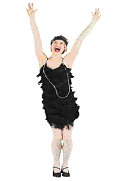
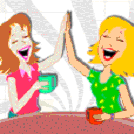
In past newsletters, we have explored the notion that EFFECTIVE COMMUNICATION is a CONVERSATION that creates a CONNECTION between the speaker and audience. Whether we like it or not, nonverbal communication has greater impact than we may ever imagine. Most of our communicating comes NOT from what we say, but from how we say it. If you glance at the graphics in the column, I'm sure you can readily identify and name the emotion or message being conveyed. Our bodies speak volumes. Body IS Language! |
|
||||||||||||||||||||||
|
As speakers, we know that facts tell, while stories sell! Most of us have adopted Bill Gove's definition of speaking: "Speaking is simply – Tell a story, make a point; tell another story and make another point." The telling of stories provides us with a forum to include characters and their dialogue, consequently, our use of natural gestures. Hand gestures and facial expressions are expressions of body language. When you speak you want your audience to receive your intended message, and not confuse their mind. Your body language and your spoken words must be congruent so they will all transmit the same signal. As much as you have control over your verbal messages, doesn't it make sense to have equal control over your non-verbal messages .... your gestures? Have you ever heard or seen a speaker say how thrilled he was to be there, but forgot to inform his face of that feeling? Did you really believe that the speaker was thrilled to be there? WHAT is a gesture? It's a movement of the body or part of the body to express or emphasize ideas, emotions or intention. When your body and mouth send the same signal, you are using your gestures to their greatest advantage. HOW should gestures be used? Gestures should be used sincerely, naturally and smoothly. WHY should gestures be used?
For example, they can:
Reminder: Never point at individuals in an audience; if you need to point to emphasize a point, then point to an imaginary person at the side!!! Facial Expressions … Don't be afraid to let your own feelings show, when telling a personal story. Though stories are different, people all experience the same emotions. Use your eyes, eyebrows and mouth in a natural way to show a mood or feeling.
Eye Contact …adds sincerity, shows you care, bonds you with individuals. When you pause 3-5 seconds with each listener, you create a one-on-one conversation, yet all feel the connection. When it comes to GESTURES and FACIAL EXPRESSIONS, the Key to success is to let yourself relax and respond naturally to what you think, feel and say. But remember, even when you're not saying anything - you're still communicating a message. 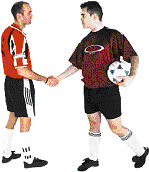 BODY is LANGUAGE!
Great speakers 'handshake' with their audience using embracing gestures of 'I like you' messages. Do you? Do your gestures indicate to your audience that you sincerely like them? I challenge you to become more aware of what your body language is doing and expressing. Practice at home working in front of a mirror demonstrating emotions through physical expression: confidence, happiness, frustration, sympathy, concern, surprise, fear, etc. When you speak in front of an audience try to videotape yourself, so you can observe how others see you. The camera doesn't lie!! You'll be able to then analyze what worked and what didn't and improve from there. I invite you to join us next month when we examine the letter H for "The 5 W's of using of Humour in your Speeches."  kathryn@kathrynmackenzie.com 416.489.6603 If you wish to unsubscribe from these newsletters, please contact Kathryn at the above email address with the word: UNSUBSCRIBE in the heading. On the other hand, if you know someone who may benefit from these newsletters, please forward them. Thank you. www.kathrynmackenzie.com © 2007 All rights reserved |
|
||||||||||||||||||||||||
|
||||||||||||||||||||||||||