

March, 2008
Nerves are Natural and Normal
Use them to YOUR Advantage!
The content of this newsletter supports the July issue on fear of public speaking.
|
Quote of the month: "Stage fright is a deceptive term. It implies that you will feel nervous the moment you get up on stage, when in fact you are nervous from the moment you get the assignment." Steve Allen |

Opening:
You may be a person who feels nervous or anxious, when you are expected to introduce yourself to a group, address a staff meeting or have to give a presentation.
Do you realize that even experienced speakers are nervous before they speak?
Do you also know that nervousness can be a good thing and that you can use it to your advantage?
Promise:
Your nerves can be lessened and you will be a more comfortable effective eager speaker if you delve into and reflect on the following three areas of nervousness.
Roadmap:
In this newsletter, we will examine three areas of nervousness: understanding, recognizing and accepting your nervous habits.
Understanding Your Nervousness
Most people feel nervous when speaking in front of an audience. On the other hand, if the notion of speaking is making you avoid work or course assignments, or even handicapping your career, you need to learn how to cope your nervousness. Maybe you've earned a reputation as being knowledgeable and credible in a specific field and you want others to hear what you have to say, but your nervousness holds you back. You CAN do something about it and you CAN learn to be a confident, comfortable speaker.
You're likely nervous because you think you'll make a mistake, forget a line, lose your spot. You're human and therefore not infallible. If you miss a line or two, no one knows that, as only YOU know YOUR script. Just pick it up and carry on.
Right from the start establish a likeable rapport with your audience, connect with them, give them a valuable message and they will be endeared to you and also be forgiving, if you happen to make an occasional stumble. The operative word here is ‘occasional'
Recognizing Nervous Habits
- Alter your mindset - turn your feeling of nervousness into feeling of positive energy; use this energy to your advantage
- Believe in and focus on your message; speak from you heart with conviction (heart always win over head)
- Refocus spotlight on to the audience, not on you- speaking is about them, not you. You have a valuable message to give, a lesson for the audience to learn and your purpose is for them to benefit from what you have to share.
- Connect with your audience - by anchoring your points with your personal stories, your emotions, and your genuine concern for them.
- Understand that the audience wants you to succeed. They are not your enemy and they don't want you to fail; otherwise it is painful for them too!
 |
Pacing on the platform | |
Fidgeting with hands, hair, clothing | |
Having no eye contact with audience | |
Uttering many um's and ah's | |
Speaking too slowly or too fast without any pauses | |
Standing rooted to one spot, possibly clinging to the lectern | |
Experiencing butterflies in stomach | |
Experiencing dry mouth, "jello" knees, racing heart | |
Any others symptoms you experience???? |
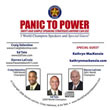
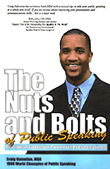
Craig Valentine, 1999 WCPS, discusses the 10X Phenomenon, on both the CD "Panic to Power" and in his book "The Nuts and Bolts of Public Speaking" (see Educational Resources below) where he states:
"...what is happening inside of you is 10 times more amplified than what the audience actually perceives. They probably do not even notice that you are as nervous as you really are...In a nutshell, the 10X phenomenon lets you know that you do not look 10% as bad as you feel."
Accepting Your Nervousness
Rather than spending time focusing on and trying to control or overcome your nerves, accept the fact that you are supposed to feel a degree of nervousness, since the success of your speech is important to you. Don't give power and attention to your nerves as they will control you. The Law of Attraction states that you draw whatever it is that you focus on. Focus on positives. The 5 points below will deal with an attitudinal mindset. You may look at my July newsletter for actual physical things you can do to ease some of your nervousness.
In summary, I encourage you to try to understand and recognize your nervousness, but don't place focus or try to control your nerves as they will become the focus and they will control you. Instead, ACCEPT that nervousness is part of presenting. View it as a good thing, since it reminds you that your presentation is important to you and it gives you that extra energy for a more animated, passionate delivery.
I invite you to join me next month, when we move onto the next letter O as it relates to Outstanding Openings Over-rule Ordinary Ones!

kathryn@kathrynmackenzie.com
416.489.6603
EDUCATIONAL MATERIALS
|
|
|
||||||
|
|
|
||||||
|
|
|
If you wish to unsubscribe from these newsletters, please contact Kathryn at the above email address with the word: UNSUBSCRIBE in the heading. On the other hand, if you know someone who may benefit from these newsletters, please forward them. Thank you.
www.kathrynmackenzie.com
© 2007 All rights reserved